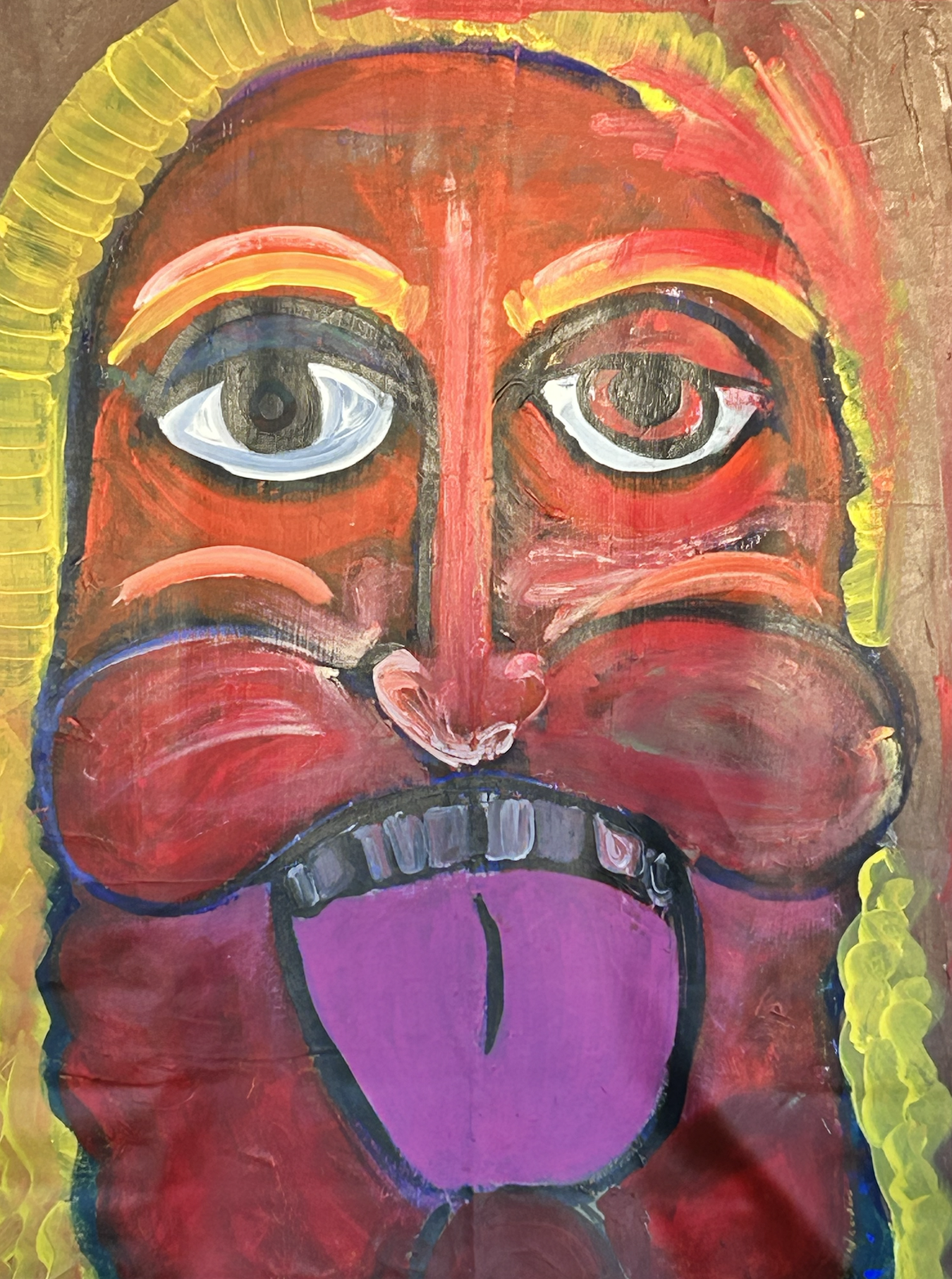
Before the world today, there was only darkness, water, and a Lonely God.
Bored, the Lonely God created the Sun and Moon. Then he shaped hundreds of creatures from clay he found beneath the water.
Inspired by the Sun and Moon, the Lonely God shaped half the clay figures in the Sun's image and called them men. He shaped the other half in the Moon's image and called them women. The Lonely God, the Sun, and the Moon grew fond of the figures, who adored them in return.
In time, the Lonely God fell in love with the Moon. To show his love, he gave the clay women a godlike gift: the ability to carry and sustain life, connecting them to one another and to all living things. This power brought them closer to the Moon through their shared connection to life.
But the Lonely God discovered the Moon and the Sun were in love. Hurt and furious, he set out for destruction. First, he separated the Sun and the Moon, forcing them to live on opposite sides of the clay world and banning them from ever seeing each other again. Then, because the Sun loved the clay people, the Lonely God made them mortal. When their clay hearts stopped beating, their bodies would return to the Earth.
To punish the Moon, the Lonely God sent three snakes to every woman: one to surround her stomach, one her body, and one to cover her throat, so she would no longer remember her connection to the Moon and the miracle she had been given. Distraught, the Moon went dark and remained so for some time. The Sun, however, knowing the clay people depended on him, vowed to stay the same and hoped his relentless perseverance would reach his lover. This continued for quite some time, until the Moon, alone in the darkness, remembered the Sun’s warmth, and a flicker of her light returned. Looking down at Earth, the Moon saw something new: a complex world of trees, plants, mountains, bugs, animals, and clay people. Awestruck by its beauty, she wept. Grateful for the Sun’s strength, she began to grow brighter until she was full again. Though being full felt good, she valued the insights she gained in the darkness. So she kept this cycle: going into the darkness, finding the good, and bringing it back.
Though the new world was a sight to behold, humanity was not thriving. Mortality made humans fearful, and their fear turned to greed. Cut off from an inner knowledge of truth, women became especially ill. One sick, lonely girl found comfort in the Moon's reflection on the ocean. She loved watching it, never knowing the Moon watched her, too. One night, beneath a full Moon, she sat on the shore, gazing at its reflection, and found a sense of inner peace. Unbeknownst to the girl, the Moon, and the Lonely God, the three trapped snakes had one flaw: because the Lonely God who created them loved the Moon, the snakes loved her, too. When the Moon was full, they would remain still, staring at her. Stunned by the peace she felt, the girl began to dance on the beach. As she danced, she no longer felt ill.
So the girl went to the beach every night. She soon noticed that she was stillest when the Moon was full. On every full Moon, she would dance; some evenings, she would sing, and others, howl. Tired of feeling ill, the girl vowed to trust the Moon and take a leap of faith the next time it was full. She found a cliff and jumped, arms spread, flying just in front of the Moon. The snakes, never having been so close to the Moon, leaped out of the girl to kiss her. The girl landed in the water, free of the snakes.
With the snakes gone, the girl felt elated and splashed around in the water, watching it shimmer in the moonlight. Then she climbed out and headed to the beach, where she built a fire to warm up and dry off.
She felt transformed—no longer ill or disconnected from her stomach, body, or throat, but connected to all of life. She was part of everything. This filled her with tremendous happiness and a deep sense of knowing in her heart.
The Lonely God witnessed the leap and was deeply moved by the girl's courage. Humbled, he realized he had been too rash in punishing the Moon, so he went to apologize. The Moon, who now understood what it meant to be lonely, forgave him. He offered to reunite the lovers, but too much time had passed, and the new Earth flourished in the balance of their light and dark. Both the Sun and the Moon had grown to love their new world and decided to leave things as they were. But the Lonely God had an idea: he created a way for them to see each other four times a year in a spectacle so beautiful that everyone in the land would stop what they were doing to admire it.
As a gift and an apology to the Moon, he gave her command of the ocean. To ensure she would never feel alone again, he gave her the stars, so even when she was dark, she would have something to keep her company.
And as an apology to the Sun for making everyone mortal, he offered humans a soul. Though their flesh would return to clay, a part of them would live on. The Lonely God also gave them the gift of dreams, so that as they slept, they could talk to their souls.
And for the girl who had taken the courageous leap, one evening, while she was deep in her dream world, the Lonely God touched her hands and the space between her eyes. He called this gift ‘artist,’ and she would use this gift to show the world everything she knew in her heart